
Unearthing England’s Commonwealth basketball silverware
English basketball has pedigree when it comes to the Commonwealth Games – the quadrennial international multi-sport event that features thousands of elite athletes from the nations and territories across the Commonwealth of Nations.
Since the sport was included in the Games’ programme from Melbourne 2006, England has racked up five medals: two bronze, two silver and one gold.
But did you know that’s not all the silverware England has to its name as a Commonwealth nation.
1978 saw the introduction of the Commonwealth Basketball Championships – a standalone international tournament for member states of the Commonwealth to enter their teams.
The competition format saw every team play each other in one group with the top four teams advancing to a semi-final and then onto a final.
Three editions took place, with the inaugural one in ’78 hosted in England and featuring just a men’s competition that was won by Canada.
Then in 1983, the Championships took place in New Zealand, where England Men beat Canada 86-80 in the final, and England Women came second behind arch-rivals Australia.
Gold medal success followed in 1991, when it was hosted in Scotland, with England Men – led by head coach David Ransom – and Women finishing top of the podium.
That puts England’s ‘Commonwealth’ tally count at four golds, three silvers and two bronzes.
Quite the haul.
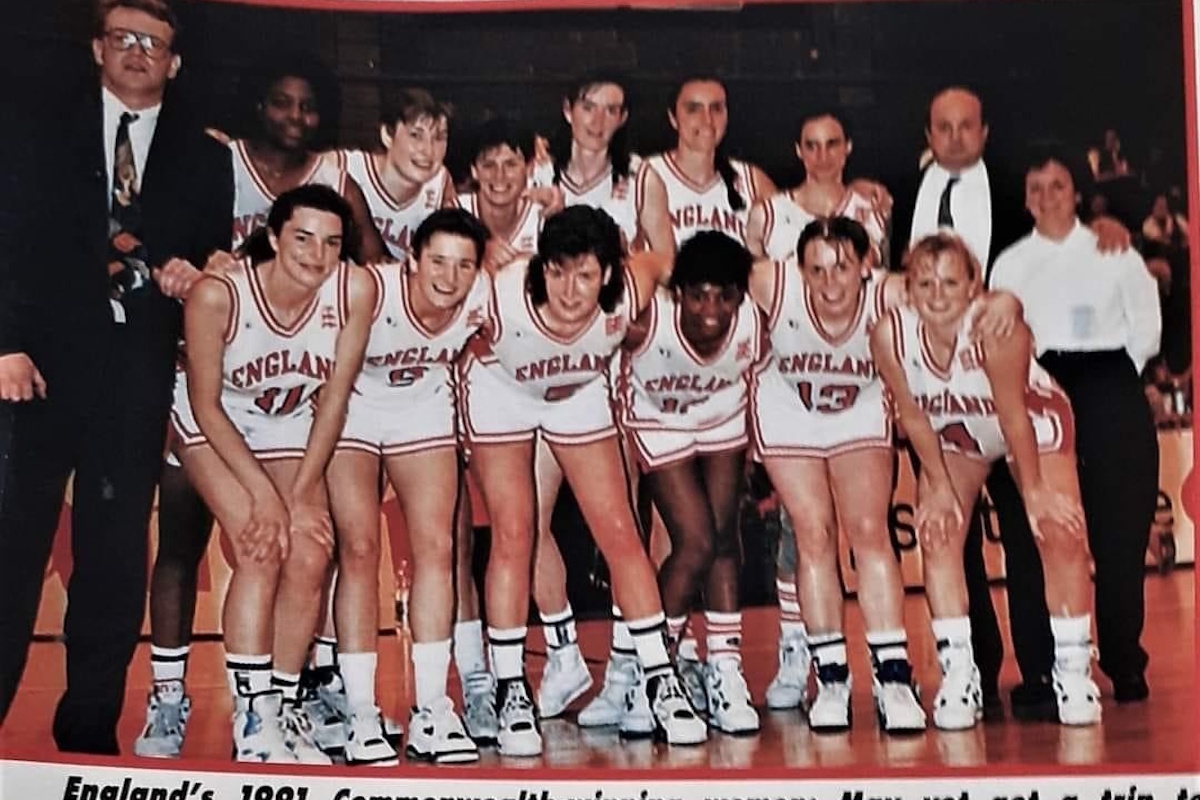
England Women win gold at the 1991 Commonwealth Basketball Championships in Scotland led by head coach Mark Clark (far left)
Notorious final versus the Kiwis
Former director and founder of Barking Abbey Academy and prominent international basketball coach Mark Clark was head coach of the England Women’s team that won gold in Edinburgh in 1991.
Supported by assistant coach Brani Bazany and team manager Pauline Prior, Clark says the tournament was an important part of the international basketball calendar that year and the gold medal was a significant accolade for his team rounding off an intensive tournament season.
"That year we had quite condensed and intensive programme for that time,” said the former London Lions women’s coach.
"There had been the Europeans, Four Countries and the Commonwealth [Championships] all in one go. So, the team had been together off and on for something like three months or so before we played in Edinburgh.
"I was the England Women’s head coach since 1989, and we were fortunate at that point because our roster would withstand any comparison with any England or GB roster today. We had players with NCAA and WNBA profiles, and those who were playing in the Euro League.
"I had known and worked with a number of those players over a period, including Andrea Congreaves and Vanessa Ellis, so I had a special relationship from that perspective."
Broadcast on Eurosport, England Women went onto to beat New Zealand in a game that Clark says became notoriously known for its foul count.
"It was an interesting game in the sense that we were very good. We started particularly well, leading the game by 5-20 points at one point in the first half. The game became a little bit notorious, because there was something like 58 fouls called, so both teams got into significant foul trouble, and New Zealand basically got back into the game by shooting a lot of free throws. Ultimately, we managed to make decent decisions and win.
"Coaching the national team is in many ways the ultimate accolade, recognition and challenge. To win gold for your country there’s no bigger honour," added Clark.
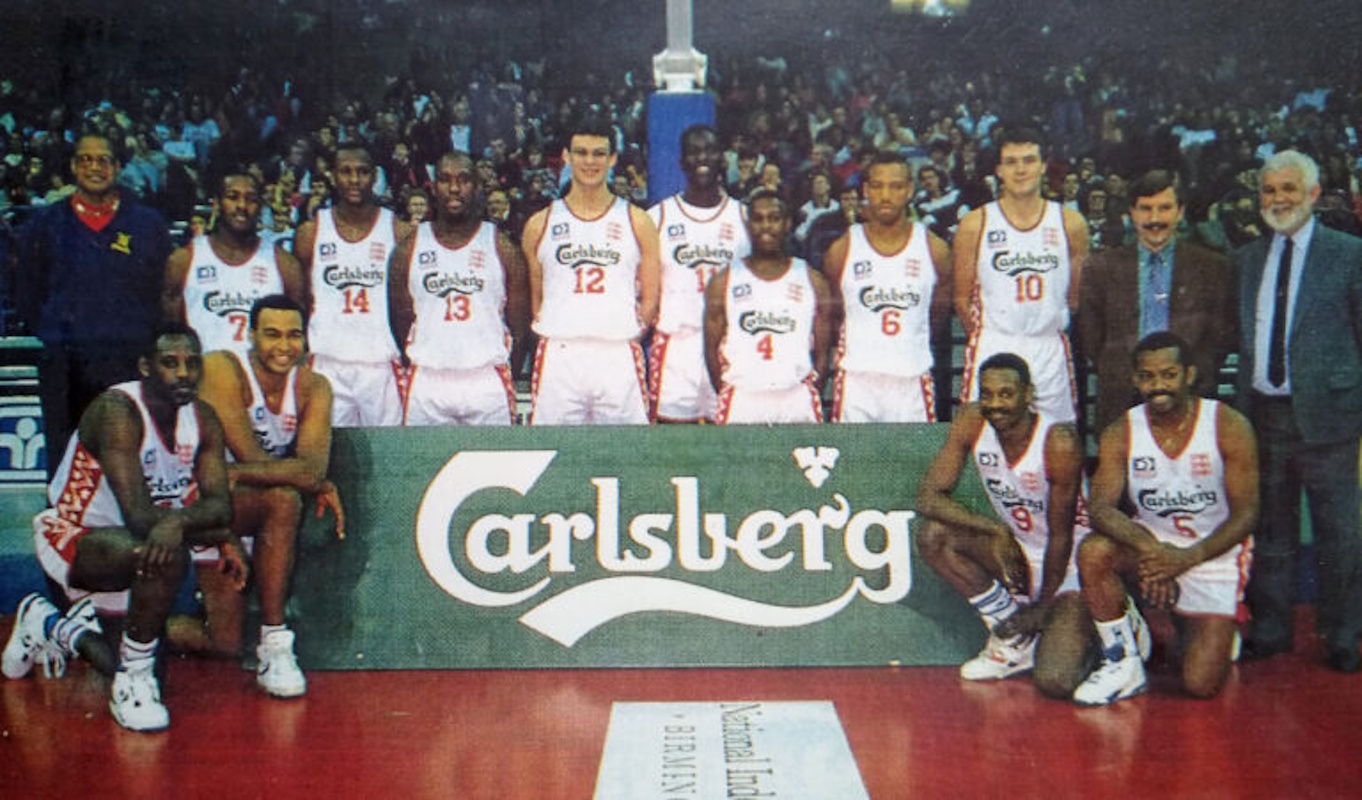
Ransom's golden giants: The 1991 England Men's squad that won gold at the Commonwealth Basketball Championships, coached by David Ransom (back row, second from right)
‘Winning was an absolute dream’
Suiting up in that tournament as a mere 20-year-old was Louise Cooke, who Clark described as carrying England through her shooting during their match against Nigeria in the group stage.
She described winning the chip as a dream.
"I'd received my first England cap probably a year or so before alongside Andrea Congreaves. So, I was young,” said Cooke, who was playing for Northampton Basketball Club at the time.
"It was a very experienced team and Mark kind of came in and brought a few younger players in, mixing and matching with the likes of Fiona Murray and Chris Castle. As a coach he was ahead of his time in a lot of ways, introducing the psychological side of basketball performance, making sure you’re in the right head space and reacting to the pressure in the right way.
"My memories of the Championships were the friendships that we built, the time that we spent coming together as a team and winning was just an absolute dream."
Centre Juanita Davis was also on the team and like Cooke has great memories of meeting other people from different Commonwealth countries. Davis remembers the final as being a feisty affair with New Zealand fighting all the way.
"We only won by one point," said Davis, who now lives there.
"We had the height advantage and some very good players, but New Zealand kept up with us because of their character. They’re very feisty and do whatever it takes. It was a tough game."
Nevertheless, Clark’s women came through and won gold, as did England Men, and to top off their achievement both teams were invited to a garden party at Buckingham Palace.
Now it's over to the quartets of Glasgow 2026 to continue England’s Commonwealth basketball medal winning legacy.

Related News
-161026092516.webp)
W/EABL Players of the Week (14 Oct 2026)
16 October 2026 5 min read-151026134105.webp)
WNBL D1 Preview (17/18 Oct 2026) - Live Stats, streaming, quotes and more
16 October 2026 3 min read-151026151945.webp)
NBL D1 and NBL National Cup Preview (17/18 Oct 2026) - Live Stats, streaming, quotes and more
16 October 2026 4 min read-151026104904.webp)
Elite Academy Leagues recap (14 Oct 2026)
15 October 2026 4 min read